
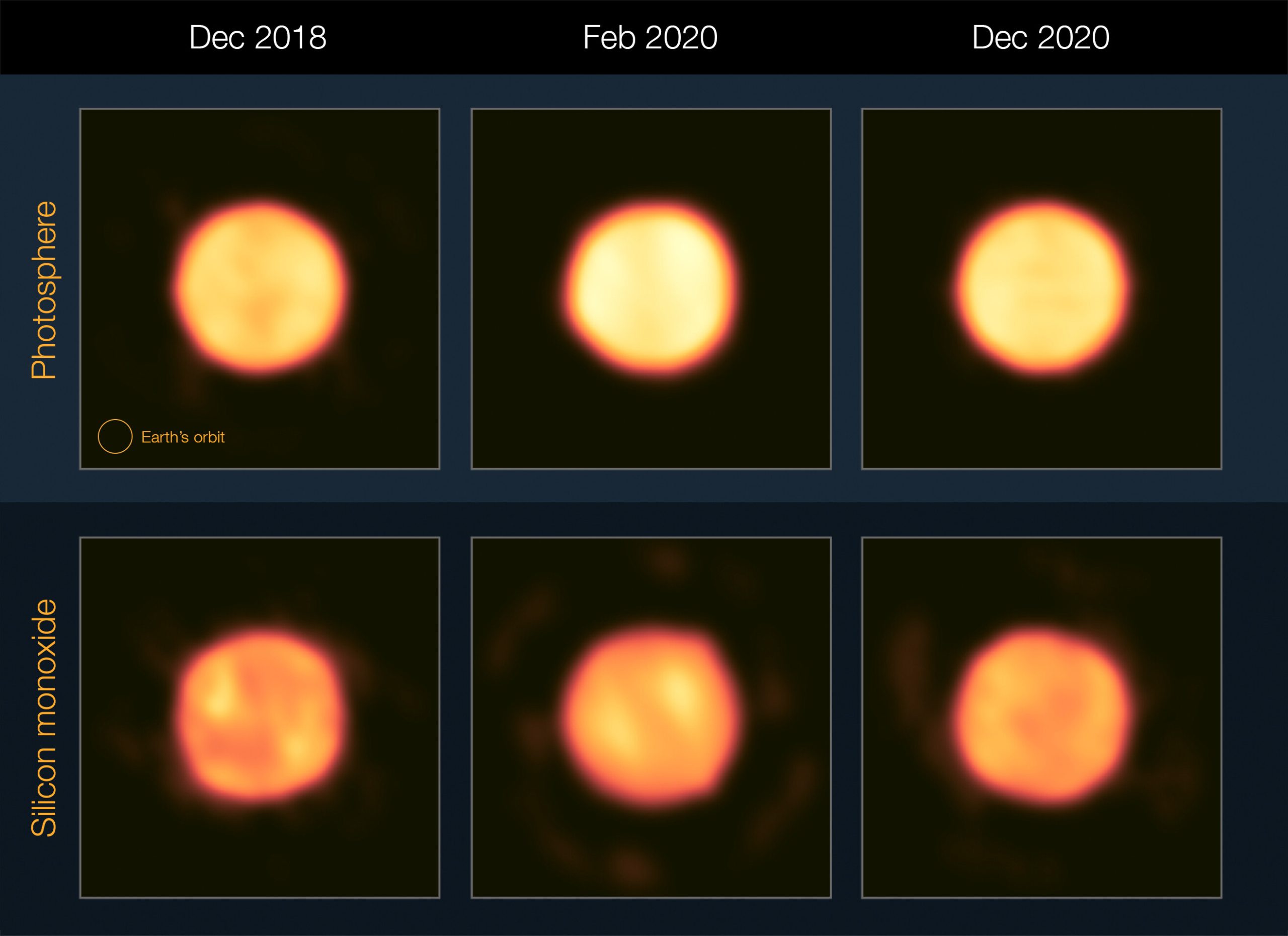
The Betelgeuse dimming event has captured the attention of astronomers worldwide as new observations confirm its atmosphere is back to normal. Recent radio observations provide crucial insights into this stellar phenomenon.
What Happened During the Dimming Event?
The recent Betelgeuse dimming event captured the attention of astronomers and stargazers alike, as the star exhibited an unprecedented drop in brightness. This phenomenon, which began in late 2019, led to concerns about the star’s potential demise. However, new radio observations indicate that Betelgeuse’s atmosphere is now returning to normal.
During the dimming event, several factors contributed to the star’s unusual behavior:
- Temperature fluctuations: The surface temperature of Betelgeuse appeared to vary significantly, impacting its luminosity.
- Dust formation: Astronomers suspect that a cloud of dust may have formed around the star, blocking light and causing the dimming.
- Convection cells: Changes in the star’s internal convection processes could have played a role in the observed brightness changes.
As the star recovers, researchers are eager to study the implications of this event. Understanding what occurred during the dimming event may provide valuable insights into the life cycle of red supergiants, and how they prepare for eventual supernova events.
New Radio Observations Explained
Recent radio observations have provided valuable insights into the Betelgeuse dimming event, revealing that the star’s atmosphere is returning to normal. Scientists have been closely monitoring the red supergiant star since its significant dimming in late 2019, which sparked widespread speculation about its potential supernova status.
The new data indicates that Betelgeuse has undergone substantial changes in its outer layers, leading to a recovery in brightness. Researchers utilized advanced radio telescopes to analyze the star’s surface and surrounding environment. The findings highlight several key aspects:
- Atmospheric Stability: The star’s atmosphere has shown signs of stabilization, suggesting a return to its typical behavior.
- Material Ejections: Evidence of material ejections during the dimming event has been detected, which contributed to the observed decrease in brightness.
- Future Monitoring: Ongoing observations are crucial to understand the long-term effects of the dimming event and Betelgeuse’s future evolution.
As researchers continue to analyze the data, the Betelgeuse dimming event remains a focal point of stellar studies, providing a unique opportunity to observe the dynamics of massive stars.
Betelgeuse’s Atmosphere Recovery
Recent observations have revealed that Betelgeuse’s atmosphere is showing clear signs of recovery following the notorious dimming event that captivated astronomers and stargazers alike. This recovery process is significant, as it indicates that the star’s outer layers are stabilizing after the dramatic changes that occurred during the event.
Researchers have utilized advanced radio telescopes to monitor the star’s emissions, allowing them to gather vital data about its atmospheric conditions. The findings suggest that:
- The temperature of Betelgeuse’s surface is returning to its typical levels.
- Changes in the star’s luminosity are stabilizing, indicating a return to normal brightness.
- There is a noticeable reduction in dust formation, which previously contributed to the star’s dimming.
Dr. Emily Carter, an astrophysicist involved in the study, stated, “The recovery of Betelgeuse’s atmosphere is a crucial development for our understanding of stellar evolution.” This new data reinforces theories about the dynamics of massive stars and their life cycles, especially in the context of events like Betelgeuse’s dimming event, which sparked widespread interest and research.
Implications for Stellar Research
The recent Betelgeuse dimming event has significant implications for the field of stellar research. Astronomers have long studied the behaviors of red supergiants, and this event provided a rare opportunity to observe the recovery process of a star following a dramatic decline in brightness.
One of the most important outcomes from the observations is a deeper understanding of mass loss in stars. As Betelgeuse dimmed, scientists speculated about whether the event was linked to a massive ejection of material. The subsequent recovery suggests that such ejections can have temporary but profound effects on a star’s luminosity and atmospheric conditions.
Additionally, insights gained from this phenomenon may help refine existing models of stellar evolution. The recovery of Betelgeuse’s atmosphere indicates that these stars can rebound from significant disturbances, which challenges some assumptions about the life cycles of massive stars.
Researchers are now eager to apply these findings to other red supergiants, enhancing our understanding of their behavior and lifespans. Ongoing studies will likely focus on how these stars interact with their environments and how such interactions influence their evolutionary paths.
Recent observations indicate that the Betelgeuse dimming event has shown signs of recovery, much to the relief of astronomers. The changes in brightness suggest that the Betelgeuse dimming event may have reached a turning point in its cycle.
By ESO/J. Drevon et al. via Openverse