
Bangladesh political fault lines are becoming increasingly evident as Sheikh Hasina makes her return to the political arena. This move raises questions about the future of governance in Bangladesh.
Understanding Sheikh Hasina’s Political Strategy
Sheikh Hasina’s political strategy in Bangladesh has consistently navigated the complex landscape shaped by longstanding political fault lines. Her approach combines a mix of pragmatism, populism, and assertive governance, aiming to maintain her party’s dominance while addressing national challenges.
At the core of Hasina’s strategy is her ability to consolidate power through various means, including:
- Political Alliances: She has formed strategic alliances to bolster her party’s influence, ensuring a broad coalition to counter opposition forces.
- Media Control: By promoting favorable narratives and limiting dissenting voices, Hasina effectively shapes public perception and strengthens her political standing.
- Development Initiatives: Focusing on economic growth and infrastructural development has garnered her substantial support from the populace, allowing her to present herself as a leader of progress.
- Security Measures: Hasina’s administration has often prioritized security, which she argues is essential for stability, but critics claim it stifles democratic freedoms.
In navigating the political fault lines of Bangladesh, Sheikh Hasina’s strategy reflects a delicate balance of power, appealing to both nationalistic sentiments and the desire for economic advancement.
The Impact of Hasina’s Return on Bangladesh
Sheikh Hasina’s return to power has had a profound impact on the political landscape of Bangladesh, revealing significant political fault lines within the country. Her leadership, characterized by a blend of populism and authoritarianism, has not only solidified her position but also deepened existing divides among various political factions.
Under Hasina’s governance, the ruling Awami League has implemented policies aimed at economic growth and infrastructural development. However, this growth has come at a cost, as opposition parties and civil society groups have raised concerns over human rights violations and the suppression of dissent. As a result, the political environment has become increasingly polarized.
The implications of these political fault lines are far-reaching. Critics argue that Hasina’s strategy may lead to instability, as marginalized groups feel excluded from the political process. Supporters, on the other hand, believe that her strong leadership is essential for maintaining order and continuity in a rapidly changing world.
- The tension between the ruling party and opposition remains a critical factor.
- Public discontent over rising costs of living may also influence future elections.
- Overall, the political fault lines in Bangladesh continue to evolve, challenging Hasina’s long-term strategy.
Key Players in Bangladesh Politics
In the complex landscape of Bangladesh politics, several key players significantly influence the dynamics and stability of the nation. Each of these figures navigates the intricate political fault lines that characterize the country.
Sheikh Hasina, the long-serving Prime Minister, remains a dominant force. Her leadership is marked by a blend of economic progress and controversial governance, which has polarized public opinion.
Another critical player is Khaleda Zia, the leader of the Bangladesh Nationalist Party (BNP). Zia’s opposition to Hasina has often resulted in intense political rivalry, fueling unrest and protests across the nation.
Additionally, emerging leaders from various parties, such as the Jatiya Party and smaller factions, are also gaining visibility. Their attempts to carve out a space in the political arena challenge the traditional dominance of the Awami League and BNP.
Moreover, civil society organizations and grassroots movements are increasingly becoming vocal players, advocating for democratic reforms and political accountability, further complicating the existing fault lines in Bangladesh’s political sphere.
As these key players interact, their strategies and alliances will continue to shape the future of Bangladesh’s governance and democratic integrity.
Historical Context of Political Fault Lines
The political landscape of Bangladesh has long been marked by deep-rooted fault lines that are shaped by historical events and enduring rivalries. The legacy of the country’s struggle for independence in 1971 set the stage for a polarized political environment, where the Awami League and the Bangladesh Nationalist Party (BNP) have emerged as the two dominant forces. These factions have not only clashed over policy and governance but also over national identity and historical narratives.
Throughout the years, Sheikh Hasina, the leader of the Awami League, has utilized these political fault lines to solidify her power. Her government has often portrayed the BNP as a threat to national stability, capitalizing on public fears of unrest. This strategy has allowed Hasina to rally support among her base while marginalizing opposition voices.
Moreover, the interplay of regional politics and international influences has further complicated the situation. As global powers engage with Bangladesh, the ramifications of these relationships can exacerbate existing divisions. The current political climate reflects a culmination of these historical grievances and strategic maneuvers, highlighting the fragility of democratic institutions in the face of entrenched fault lines.
Public Reaction to Hasina’s Comeback
The recent developments surrounding Sheikh Hasina’s political comeback have ignited a flurry of reactions among the Bangladeshi populace. Many citizens are expressing their sentiments on social media, reflecting deep divisions in the country’s political landscape.
Supporters of Hasina argue that her return signifies stability and progress, citing her government’s previous achievements in economic growth and infrastructure development. They believe that her leadership will continue to strengthen Bangladesh’s position on the global stage.
On the other hand, critics are voicing concerns about the implications of her comeback on democracy and human rights. They fear that the political fault lines in Bangladesh may widen further, leading to increased polarization among various groups.
Public opinion is divided, and several protests have erupted across the country, showcasing the passionate responses from both sides. Key themes in these demonstrations include:
- Support for democratic governance
- Calls for accountability
- Concerns regarding political repression
As Bangladesh navigates these turbulent waters, the public’s reaction to Hasina’s comeback could ultimately shape the future of the nation’s political fault lines.
Future Implications for Governance
The political landscape in Bangladesh is increasingly shaped by ongoing fault lines, particularly as Sheikh Hasina solidifies her grip on power. The implications for governance are profound, as her administration navigates a complex web of challenges.
As Hasina continues her strategy, several factors will influence the future of governance in Bangladesh:
- Political Stability: The ability of Hasina to maintain stability will determine the effectiveness of her policies and the country’s overall progress.
- Opposition Dynamics: The fragmented opposition poses a significant challenge, potentially leading to increased tensions and unrest.
- International Relations: How Hasina engages with global powers will affect foreign investment and support, crucial for Bangladesh’s economic development.
- Public Sentiment: The population’s response to governance changes will influence political fault lines, with potential for shifts in public opinion.
As these factors unfold, the ramifications for governance in Bangladesh will become clearer, highlighting the intricate balance Hasina must maintain. Understanding these political fault lines is essential for anticipating the future trajectory of the nation’s governance and stability.
Comparative Analysis with Previous Elections
A comparative analysis of the recent elections in Bangladesh reveals significant shifts in the political landscape, especially in light of Sheikh Hasina’s strategy. In previous elections, the polarization between the Awami League and the Bangladesh Nationalist Party (BNP) was stark, often resulting in violence and unrest. However, the current political fault lines appear to be more nuanced, with emerging factions within the traditional parties complicating the dynamics.
During the last election cycle, the Awami League maintained a strong grip on power, leveraging its extensive network and grassroots support. Yet, the BNP, although weakened, has shown resilience by forming alliances with smaller parties, attempting to reclaim influence. This new approach highlights the shifting alliances and the potential for new political movements to emerge, challenging the status quo.
Furthermore, the increased role of social media and digital campaigning has altered voter engagement, making it essential for parties to adapt to these changes. The presence of independent candidates also adds another layer to the electoral process, creating a complex web of interests that may redefine the political fault lines in Bangladesh. As the country moves forward, the implications of these shifts remain to be fully realized.
Expert Opinions on Political Stability
Experts are divided on the implications of Sheikh Hasina’s strategy for the political stability of Bangladesh. Some analysts believe that her approach, characterized by a firm grip on power, may exacerbate existing political fault lines, leading to further polarization among the populace.
Dr. Farah Ahmed, a political scientist at Dhaka University, argues that Hasina’s tactics are designed to consolidate her party’s position while alienating opposition voices. She states, “The current political climate is a reflection of deep-seated divisions that have only worsened since her return to power. If these fault lines are not addressed, we may witness increased civil unrest.”
Conversely, Professor Ahsan Khan believes that Hasina’s leadership could stabilize the situation in the long term. He claims, “Her ability to navigate complex political landscapes has proven effective in the past. If she can foster dialogue, it might bridge some of the divides.”
As Bangladesh faces critical choices ahead, the expert opinions highlight the delicate balance between maintaining authority and fostering an inclusive political environment, underscoring the significance of the political fault lines that define the nation’s current landscape.
Sheikh Hasina’s strategy has been pivotal in navigating the complex Bangladesh political fault lines that have emerged in recent years. By addressing key issues, she aims to solidify her party’s position amid the shifting Bangladesh political fault lines.
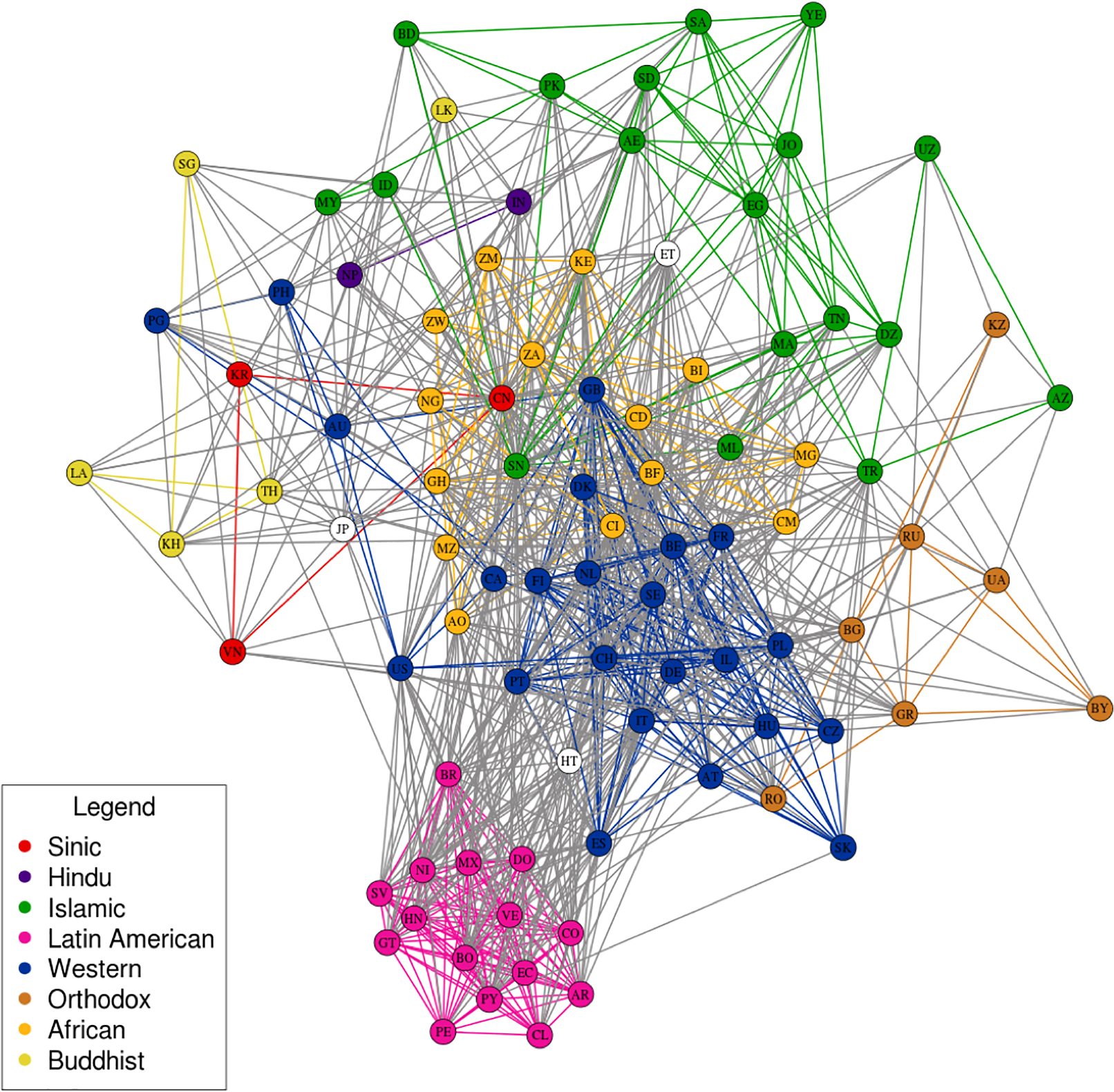
By Bogdan State, Patrick Park, Ingmar Weber , Michael Macy (May 2015) The Mesh of Civilizations in the Global Network of Digital Communication PLOS ONE DOI: 10.1371/journal.pone.0122543 via Openverse